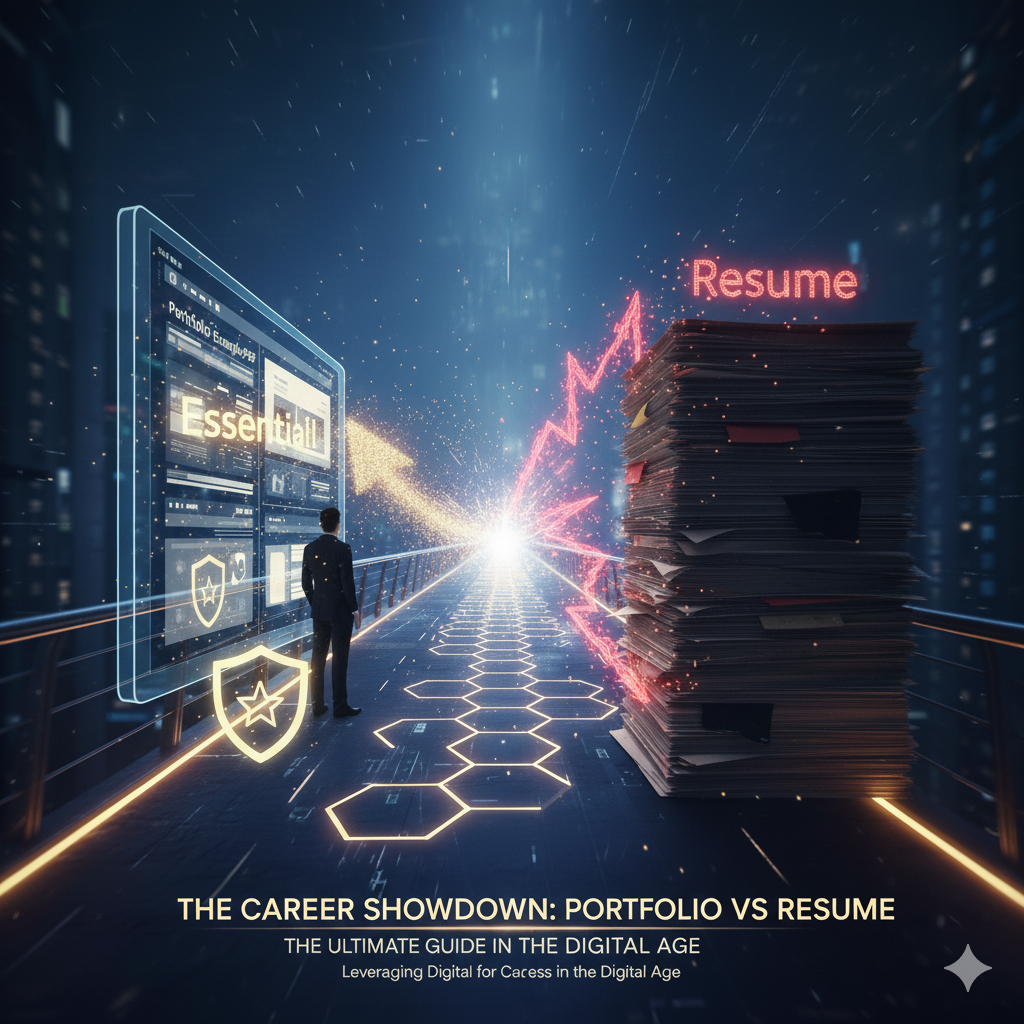
The foundation of any successful job search has long rested on the humble resume. Yet, in the modern, visual, and highly specialized professional world, a new champion has emerged: the portfolio. The question is no longer which one to use, but how to strategically leverage both. Understanding the dynamic between a portfolio vs resume is the key to unlocking the best career opportunities today.
Think of your resume as your formal, historical data sheet, detailing your job titles and dates. The portfolio, however, is your performance review, showing tangible results, creative process, and true capability. It’s the difference between telling someone you're a great writer and letting them read your best work. Let's delve into the history of these two documents and reveal why their synergy is unstoppable in the job market of 2025.
A Tale of Two Documents: The History of Credentials
While both the portfolio and the resume serve as professional credentials, their origins are distinct, reflecting different eras of work and trade.
The Ancient Origins of the Resume
The concept of listing one's skills and experience is ancient, but the modern resume as we know it has a surprisingly recent history.
- Early Credentials: For centuries, a worker's reputation or a letter of recommendation served as the primary proof of skill. Guilds and apprenticeships relied on demonstrated mastery rather than written documents.
- The Renaissance Introduction: The earliest known resume is attributed to Leonardo da Vinci, who, in 1482, wrote a letter detailing his engineering and artistic skills to the Duke of Milan. This was a biographical list, a tool for soliciting a new patron.
- The Industrial Age: As workplaces became formalized and companies grew in size during the Industrial Revolution, the need for a standardized summary of work history became apparent. This allowed employers to quickly categorize candidates based on previous roles and education.
- The 20th Century Standard: The resume was cemented as the standard application document in the mid-20th century. It became a one-page (later two-page) summary focused on chronological job history, education, and bulleted achievements. The purpose was strictly filtering and speed of review.
The Portfolio: A Tradition of Visual Proof
In contrast, the portfolio has always been about visual evidence and demonstration, dating back to artistic and architectural practices.
- The Artistic Tradition: The portfolio, or port-folio (meaning "carry-sheet"), was originally a physical case used by artists, architects, and designers to carry large drawings and blueprints. Its purpose was demonstration and quality assessment.
- The Apprenticeship Model: A student architect would present their folio of drawings and completed projects to secure an apprenticeship or commission. The work itself was the qualification.
- Digitization and Accessibility: With the rise of the internet, the physical portfolio evolved into a digital collection. This was a game-changer, allowing highly detailed, interactive, and globally accessible work samples. This digital shift led to the modern conflict: why describe your skills in a resume when you can show them in a portfolio?
Understanding this contrast reveals the current dynamic: the resume is a tool for the HR system, and the portfolio is a tool for the hiring decision-maker.
Why the Portfolio is Now the Tiebreaker in 2025
While the resume is still required for the initial application filter (the ATS), the portfolio has become the definitive tool for securing interviews and landing the job. This shift is driven by specialization and the need for measurable results.
Moving Beyond the Bullet Point
In an economy saturated with similar job titles, the resume simply can’t differentiate candidates enough to justify a hiring decision.
- Evidence-Based Hiring: Employers are tired of generic resume claims ("Increased sales," "Managed projects"). The portfolio provides the crucial evidence: a case study showing how you increased sales, what the project was, and the specific, measurable outcome. It proves competence.
- Showcasing Process, Not Just Result: For creative roles like UX design or content strategy, the process is as important as the final product. A portfolio allows you to walk the reviewer through your thinking, problem-solving approach, and methodology. This insight is impossible to convey on a resume.
- Handling Career Transitions: If you are changing careers, your resume may not reflect your new direction. A targeted portfolio, however, can showcase relevant transferrable skills and new projects you’ve completed, immediately validating your transition.
- The Digital First Impression: When a recruiter receives an application, the first thing they often look for is the link to your portfolio. A compelling online presence, which you can learn to create by reading about online portfolio websites free: how to build yours today, is the true first impression in the digital age.
The resume gets you into the pipeline; the portfolio gets you the interview. They must work together seamlessly to maximize your impact.
Practical Guide: Achieving Synergy Between Portfolio and Resume
A career strategy shouldn't focus on portfolio vs resume, but rather portfolio and resume. Here are practical tips for making these two documents function as a powerful, cohesive team.
1. The Resume: A Strategic Teaser
Your resume's primary job is to pass the ATS (Applicant Tracking System) screen and direct the human eye to your portfolio.
- Optimize for Keywords: Use job-specific language and keywords to ensure your resume passes the automated filter. Keep the format simple and standard for ATS readability.
- Prominent Portfolio Link: Place your portfolio URL at the very top of your resume, right under your contact information. Make it a clean, clickable hyperlink.
- The "Show, Don't Tell" Bullets: Rewrite your bullet points to act as teasers for your portfolio projects. For example, instead of "Managed the redesign of the company website," write: "Led a UX-driven website overhaul; View the full case study in my portfolio."
2. The Portfolio: The Deep Dive
Your portfolio is where you prove your claims and show the depth of your expertise.
- Focus on Context and Narrative: Use your portfolio to tell the story behind each project. Clearly explain the challenge, your specific role, the solution, and the measurable results.
- Include a Resume Link: Don't assume the reviewer will go back to the original application. Include a link to download a clean PDF version of your resume within your portfolio, often on the "About" or "Contact" page.
- Maintain Consistency: Ensure the job titles and dates listed in your portfolio case studies perfectly match the timeline on your resume. This consistency builds trust and professionalism.
- Tailor Content: Just as you tailor a resume for a job, you can use your portfolio to highlight specific projects most relevant to the target company. Maintaining a focused digital presence is a primary reason why every professional needs a digital portfolio in 2025.
By leveraging the resume for speed and the portfolio for depth, you present a complete, compelling, and utterly professional package. In a competitive world, using the right tools to present yourself makes all the difference. As the Harvard Business Review notes in its analysis of modern hiring practices, candidates who provide concrete, demonstrated proof of skills are consistently favored over those who rely on traditional credentials alone.