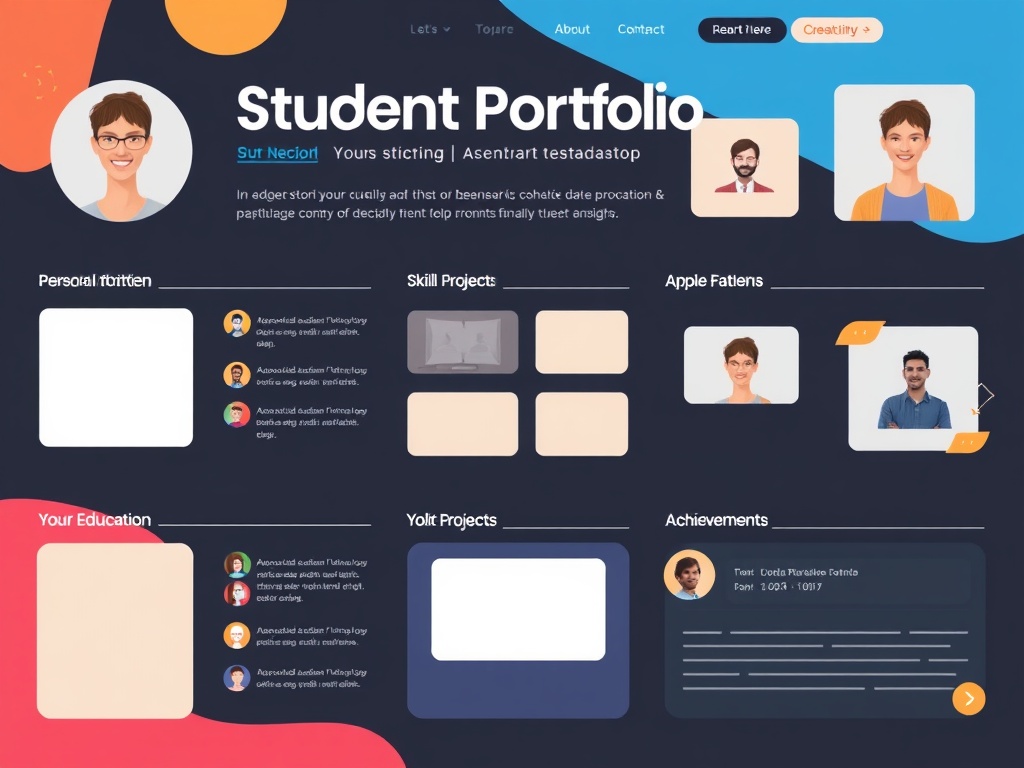
In the academic and professional world, you are more than just a GPA or a list of bullet points on a resume. You are a creator, a problem-solver, and a learner with a unique set of experiences. The key to communicating this full, dynamic picture is mastering how to make a student portfolio that truly stands out.
A well-crafted portfolio transforms your achievements from simple claims into undeniable, visual proof. It's the difference between telling someone you can design a website and showing them a fully functional one that you built. This guide will take you step-by-step through the process, ensuring your digital showcase is compelling, professional, and ready to open doors to your future.
The Portfolio: From Parchment to Pixels
To truly appreciate the power of today's digital showcase, it helps to understand its origins. The underlying principle of the portfolio – a curated collection of one's best work – is centuries old.
- Ancient Roots in Apprenticeship: In medieval Europe, aspiring craftsmen and artists, like jewelers or painters, were required to present a "masterpiece" and a body of work to the guild to prove their competence and attain master status. This rigorous, juried collection of work was the foundational concept of the portfolio, demonstrating not just talent, but mastery of a specific trade.
- The Architect's Case: For centuries, architects and engineers compiled detailed drawings, material samples, and scaled models in physical cases to present their capabilities to clients and city planners. These were sophisticated, tangible presentations that required organization, foresight, and clear communication, all skills still necessary today when considering how to make a student portfolio.
- The Digital Leap: The late 20th and early 21st centuries revolutionized this practice. The internet allowed for the transition from bulky physical cases to accessible, global digital platforms. This shift democratized the portfolio, making it a powerful tool not just for artists, but for students in every field, from computer science to liberal arts. Today, a website provides endless capacity for media, reflection, and reach, fundamentally changing the approach to professional self-presentation.
The Modern Imperative: Why Your Portfolio is Crucial
Knowing how to make a student portfolio is an essential skill because the current job market and university admissions processes demand more than transcripts. They seek demonstrable skills and evidence of potential.
- Beyond Theoretical Knowledge: Employers and admissions committees often worry that students are only strong in theory. Your portfolio solves this by showcasing your ability to apply knowledge. For an engineering student, this means featuring CAD drawings and project reports; for a communications major, it’s showcasing campaign strategies and writing samples.
- Highlighting Soft Skills: A well-organized portfolio implicitly demonstrates key soft skills that resumes often miss, such as attention to detail, organization, project management, and self-motivation. The reflective writing accompanying each project also reveals critical thinking and communication skills.
- Your Personal Brand Hub: Your portfolio is the centerpiece of your professional identity. It is a dedicated, owned space where you control the narrative, design, and content. It’s a crucial component for establishing a strong online presence, which is increasingly required for success. For insights into mastering this digital presence, read more in this guide on how to build a winning online portfolio that gets you noticed.
- Proving Adaptability: The digital world changes fast. By featuring diverse projects, you prove that you are adaptable and capable of learning new tools and technologies. As noted by sources like UNESCO, the ability to demonstrate a variety of technical and creative skills is vital for thriving in the modern global economy.
The Practical Guide: How to Make a Student Portfolio Step-by-Step
Creating a high-impact portfolio requires strategy, not just creativity. Here is your practical checklist for building a standout digital showcase.
1. Define Your Audience and Goal
- Target Clarity: Who are you trying to impress? (e.g., University admissions, a specific company for an internship, a scholarship committee).
- Content Focus: Tailor your project selection to align with their expectations. If applying for a marketing role, emphasize projects with clear metrics and strategy.
- Platform Selection: Choose a platform that suits your needs. Many offer free tiers for students, making it easy to get started right away. Explore available online portfolio websites for free to find the best fit.
2. Curate and Categorize Your Best Work
- Quality Over Quantity: Only include your absolute strongest, most representative work. A few excellent projects are always better than a dozen mediocre ones.
- Diverse Categories: Group your work logically to make navigation easy. Examples include: Academic Projects, Creative Works, Volunteer Experience, Technical Skills, or Writing Samples.
- Visual Appeal: Ensure all images, videos, and PDFs are high-resolution and professionally presented. Low-quality media reflects poorly on the quality of your work.
3. Write Detailed Project Case Studies
Each project needs context to be impactful. Use the STAR method (Situation, Task, Action, Result) as a guide for your descriptions:
- The Challenge: Briefly describe the problem or assignment you were given.
- Your Role and Actions: Clearly outline your specific contributions and the tools or methodologies you used. Did you code the front-end? Did you conduct the user research?
- The Outcome: What was the result? Use data and metrics whenever possible (e.g., “Improved website speed by 15%” or “Raised $500 for the local charity”).
- Key Learnings: Reflect on the experience. What did you learn? What skills did you develop? This shows maturity and a growth mindset.
4. Design and Personalize
- Clean Design: Use a simple, professional template. Focus on white space and clear typography to let your work breathe.
- The About Me Page: This is your chance to shine. Write an engaging, authentic biography that covers your passions, educational journey, and career goals. Include a professional headshot.
- Consistent Branding: If you have a professional logo or color scheme, use it consistently throughout the site to reinforce your personal brand.
5. Launch, Share, and Maintain
- Test Everything: Ensure all links work, the site is mobile-friendly, and all content loads quickly. A broken portfolio is a missed opportunity.
- Strategic Sharing: Include the link on your resume, email signature, LinkedIn profile, and any networking materials.
- Regular Updates: A portfolio is a living document. Commit to adding your best new project every few months. This shows continuous engagement and skill development, proving that you are always learning and growing.
By diligently following these steps on how to make a student portfolio, you are creating more than just a website; you are building a powerful career asset that will serve as your digital ambassador for years to come. Start today, and turn your potential into tangible proof.