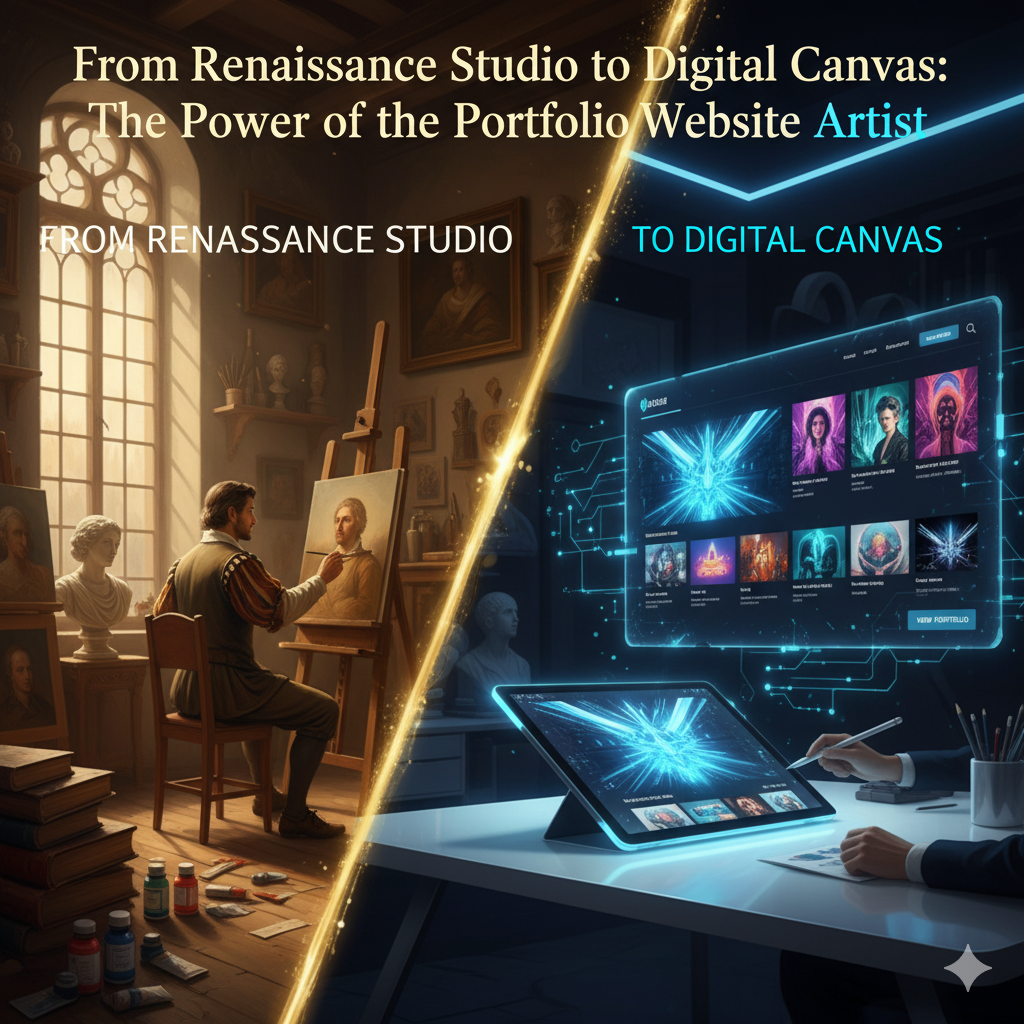
For centuries, the artist’s path to success has hinged on one universal requirement: proof of skill. Whether seeking patronage from a powerful duke or admission into a prestigious academy, the quality of a creative’s work was the ultimate currency. Today, that principle remains ironclad, but the stage has changed entirely. For the contemporary creator, the portfolio website artist is the single most critical tool for selling, sharing, and defining a professional career.
This dedicated digital space is where your unique vision meets the global marketplace. It is your permanent gallery, your business hub, and the ultimate defense against getting lost in the noise of social media feeds. If you are serious about transforming your creative passion into a sustainable career, mastering your online presentation is the first masterpiece you must complete.
The ancestor of today's digital showcase is steeped in history and the economics of art production. Understanding this past illustrates why the portfolio has always been essential.
During the Renaissance, art was rarely created speculatively; it was commissioned. Master painters like Leonardo da Vinci and Raphael ran bustling workshops known as botteghe. Apprentices, or garzoni, learned their craft by progressing through various tasks, from grinding pigments to copying masterpieces.
The true test of a master’s skill, and the basis for his reputation, was the quality of the finished commissions displayed for wealthy patrons. As detailed in Life in a Renaissance Artist's Workshop, these patrons, who were typically rulers, bankers, and high clergy, judged an artist's worth entirely by their proven track record. The physical works, sketches, and studies served as the functional "portfolio," demonstrating skill, reliability, and the ability to handle grand, complex projects.
With the rise of art academies and the subsequent decline of the guild system, the formal portfolio became a necessity for entry and graduation. A portfolio—often a large, leather-bound folder—was used to showcase a student’s mastery of academic principles, such as anatomy, perspective, and drawing technique.
Later, as the market evolved to include art dealers and public galleries in the 19th and 20th centuries, the physical portfolio became the tool for securing exhibitions and sales. Artists used high-quality slides or photographs of their work, carefully arranged in binders, to present their current body of work to critics, gallery owners, and serious collectors. This focus on meticulous presentation directly informs the design and curation strategies of the modern portfolio website artist.
In the 21st century, the art world has been fundamentally disrupted by digital technology. Whether you create physical sculptures or purely digital NFTs, your online presence is the most powerful determinant of your financial success and professional reach.
A physical gallery exhibition is fleeting and geographically limited. A dedicated portfolio website artist is a permanent, global exhibition open to millions of potential collectors, curators, and buyers worldwide.
This immediate global connectivity is unprecedented in the history of art and is essential for building a truly international brand.
For the contemporary artist, income streams are often diverse. A portfolio website is the central hub that facilitates these varied sources of revenue.
If budget is a concern, remember that building a polished presence doesn't require a huge upfront investment. Many excellent starter tools offer portfolio websites free to help artists get their foundational showcase online.
A professional artist’s portfolio is a curated conversation with the viewer. It must be clear, compelling, and intentional. Here is how to make your portfolio website artist a client magnet.
Resist the urge to upload every piece you have ever created. Curatorial focus is a sign of artistic maturity and confidence.
The viewer's experience on your website is a direct reflection of your professionalism. Poor presentation cheapens even the finest art.
Art buyers are invested in the story, the process, and the value. Do not let your visuals stand alone.
By treating your online portfolio as seriously as you treat your actual creative practice, you ensure your work receives the professional attention and valuation it deserves. Start building your professional presence today via the resources available on the Uni-B Portfolio Building website.