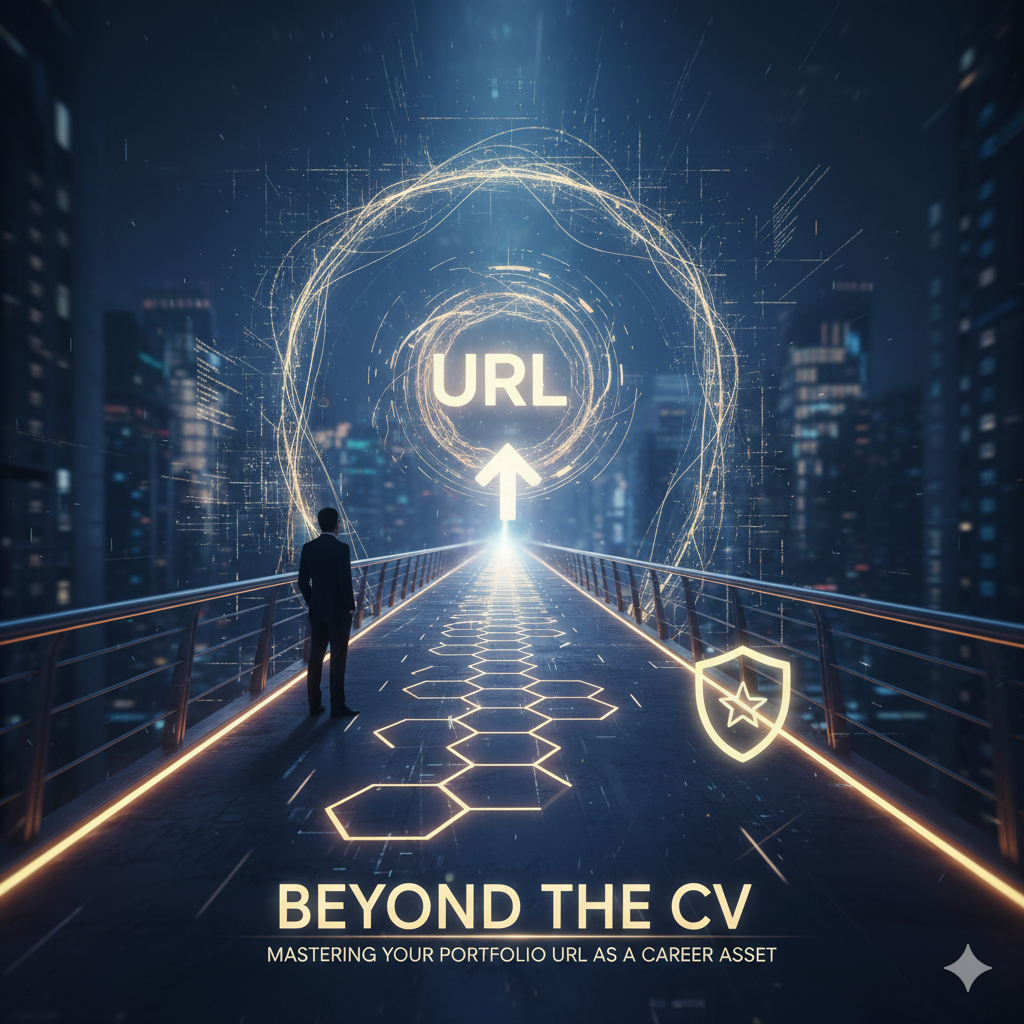
In today's digital landscape, your professional identity is no longer defined by a static paper resume. It lives online, accessible globally with a single click. The key to unlocking this visibility? Your portfolio URL. It’s the digital front door to your best work, your professional brand, and your career trajectory.
A well-chosen portfolio URL is often the first thing a potential client or hiring manager sees. It needs to be memorable, professional, and instantly convey who you are. Far from being just a web address, your URL is a powerful piece of branding. If you want to stand out, you have to treat it like a prime piece of digital real estate.
The History of the URL and the Rise of the Digital Portfolio
To appreciate the power of a modern portfolio URL, it helps to look at where it came from and how it evolved into a career necessity.
From Network Address to Personal Brand
The concept of a Uniform Resource Locator (URL) originated with the birth of the World Wide Web in the late 1980s and early 1990s. Its original purpose was purely functional: to provide a standardized way to locate a specific resource (a file, a document, or an image) on the vast network of the internet.
- Early Web and Personal Pages: In the early days of the internet, personal websites were often hosted on academic or internet service provider domains, resulting in long, complex, and unmemorable URLs. Think users.ispname.net/~yourname/myproject.html.
- The Dot-Com Boom and Branding: The dot-com boom of the late 90s made domain names commercially valuable. Companies realized a short, memorable, and relevant domain name was crucial for branding and marketing.
- The Portfolio Shift: Traditionally, creative and professional work was compiled in physical books or binders. The late 2000s saw a massive shift. As internet speeds increased and design tools became accessible, professionals across all fields, from graphic design to software engineering, realized they could display richer, more interactive work online.
- The Professional Imperative: The digital portfolio moved from a nice-to-have supplement to the primary way professionals showcase their skills. Consequently, the portfolio URL transitioned from being a technical address to being a crucial element of one's personal brand and professional identity. It became the modern equivalent of a perfectly engraved business card, available 24/7.
This history underscores a critical point: your URL is no longer a technical afterthought. It is a deliberate marketing choice that reflects your foresight and professionalism.
Why Your Portfolio URL is Your Most Important Digital Asset Today

In 2025, your portfolio URL serves multiple vital functions that transcend the mere act of linking to a website. It’s a tool for trust, recall, and strategic networking.
The Power of Professional Recall and Trust
A well-crafted URL drastically increases your chances of being remembered and trusted by hiring managers and potential clients.
- Instant Credibility: A custom domain, like YourName.com, immediately suggests professionalism and investment in your career. Contrast this with a free, generic subdomain like sitebuilder.com/users/yourname, which can look temporary or less serious.
- High Recall: When a recruiter mentions your name in a meeting, they need to be able to recall your website address instantly. A clean, short, and personalized URL makes it easy to remember and type into a browser.
- SEO Advantage: Search Engine Optimization is not just for businesses. When someone searches for "Your Name + Freelancer" or "Your Name + Skill," a keyword-optimized portfolio URL significantly increases the likelihood that your site will rank higher than your LinkedIn or social media profiles.
- Bridging the Gap: Whether you are emailing a client, networking at a conference, or applying for a job, your portfolio URL is the universal connector. It’s the single best link to put on your resume, your social media profiles, and even your printed materials. This is why every professional needs a digital portfolio in 2025.
Ignoring the quality of your URL is like having a perfectly designed logo but printing it on cheap, blurry paper. The message is inconsistent.
The Practical Guide to Mastering Your Portfolio URL
Choosing and maintaining the perfect portfolio URL requires a strategic approach. Follow these practical steps to ensure your web address works as hard as you do.
1. Choosing the Right Structure
The best URLs are simple, brand-focused, and easy to communicate verbally.
- Priority 1: Your Name (The Gold Standard): If possible, secure YourName.com or YourFirstNameLastName.com. This is the cleanest, most professional, and most memorable option.
- Priority 2: Name + Modifier (If Primary is Taken): If your name is common, add a simple professional modifier:
YourNameDesign.com (for designers)
YourNameWrites.com (for writers)
YourNameCode.com (for developers)
- Priority 3: TLD (Top-Level Domain) Choice: Always aim for .com first. If unavailable, professional alternatives include .net, .co, or a country-specific TLD if your target market is local. Avoid obscure or trendy TLDs for professional portfolios.
2. Keeping it Clean and Simple
Simplicity is your friend. The more complex the URL, the more likely someone will misspell it or forget it.
- Avoid Hyphens and Numbers: Hyphens look spammy and are easily forgotten. Numbers make no sense when someone hears the address verbally. Stick to letters.
- Keep it Short: Shorter is always better for memory and typing speed. Aim for fewer than 15 characters if possible.
- Skip Generic Subdomains: Do not rely on URLs provided by free website builders that look like builder.com/your-name. Instead, use one of the many available resources to find online portfolio websites free: how to build yours today, and then map your custom domain to it.
3. Maintaining and Promoting Your URL
A perfect URL is useless if no one clicks on it.
- Consistent Placement: Place your URL prominently on all professional materials: email signature, LinkedIn bio, Twitter profile, printed resume, and business cards. Consistency reinforces your brand. For a general overview of portfolio building strategy, be sure to visit the Uni-B Portfolio Building website.
- Use URL Shorteners for Tracking: While your main URL should be clean, use a URL shortener for specific campaigns or social media posts. This allows you to track clicks and see which platforms drive the most traffic to your portfolio.
- Link Hygiene: Ensure your URL is always active and points directly to your portfolio's homepage, not to a specific project or an outdated page. Regularly check all inbound links to your portfolio to maintain link health. According to a digital strategy guide from the University of Cambridge, maintaining "link hygiene" is essential for long-term SEO and professional credibility.
By treating your portfolio URL as the premium entry point to your professional world, you ensure that every opportunity to showcase your work begins with a confident and memorable first impression.