The moment you decide to take control of your career narrative, you face a single, monumental question: How should I present my work? Gone are the days of shuffling through physical binders. Today, your career hinges on the design of your online showcase. Choosing the right website for portfolio design is not just a technical step; it’s a foundational career decision.
A portfolio website is more than a simple gallery of images. It is your dedicated professional storefront, a place where potential clients and employers can quickly understand your expertise, your process, and your professional personality. The aesthetic appeal and functionality of your site are just as important as the quality of the work inside it.

To appreciate the modern website for portfolio design, we need to look back at its journey from a case of leather to a custom web domain. This evolution reflects the shifting nature of work itself.
The concept of a portfolio dates back to the Renaissance. Master artists like Leonardo da Vinci maintained meticulously detailed notebooks and folios, which served as both sketchbooks and collections of finished work. These physical documents were essential for securing patronage and demonstrating mastery. The original portafoglio, or “carry leaf,” was a physical case designed for transit.
The shift to digital began in the late 20th century, first with e-portfolios shared on local networks in academic settings. These were simply digital files stored on a computer, a helpful way to organize student work but not publicly accessible.
The true revolution began with the rise of the World Wide Web in the 1990s. Early websites, built with simple HTML, were often text-heavy and clunky. But for designers and developers, the web offered an unprecedented opportunity to display their work globally.
As technology advanced, so did the sophistication of the online showcase. The introduction of CSS in the late 1990s allowed for separation of content and presentation, finally letting creatives take control of the look of their sites. Suddenly, the website itself became a showcase of the designer's skill, a fully custom website for portfolio design. As Britannica notes in its history of web browsers, the rapid development of the web allowed visual content to take center stage, a crucial step for creatives.
In the modern, digital-first economy, the design of your portfolio is a critical business asset. It impacts everything from first impressions to job offers.
If you are a designer, developer, writer, or any creative professional, your portfolio’s design is your first, and most important, project. A well-designed website acts as a meta-project, proving your skills in user experience (UX), visual hierarchy, and performance.
A cluttered, slow, or difficult-to-navigate site immediately undermines your stated abilities. Conversely, a clean, responsive, and fast website for portfolio design proves you practice what you preach.
A resume offers bullet points; a portfolio website offers context. You need a platform that can handle detailed, narrative-driven case studies, not just static image galleries. This is why having an intuitive and flexible website for portfolio design is so essential.
The site must allow you to walk a visitor through your design process, explaining the challenge, your unique solution, and the measurable results. This is what truly separates a good candidate from a great one: the ability to articulate how they think. If you are still in the early stages, check out our guide on online portfolio websites free: how to build yours today to get started on the right foot.
Your portfolio is the single most efficient networking and prospecting tool you own. It’s always available, works 24/7, and can be shared instantly across continents.
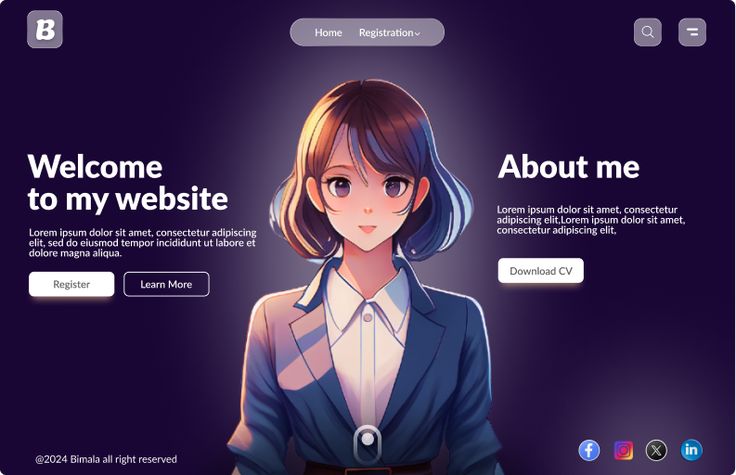
Choosing and designing your platform can feel overwhelming, but by focusing on a few core principles, you can build a site that truly stands out.
The visitor’s journey through your site must be seamless. A great UX keeps the focus on your work, not on struggling with the interface.
Your homepage should act as a powerful first impression. You don't need every project you've ever completed; you need the best ones.
Your portfolio design should subtly reflect your personality without distracting from the work. This is where you can connect with your audience on a human level.
By investing in the design of your website for portfolio design, you are doing more than simply uploading files. You are creating a powerful, digital career asset that will generate opportunities for years to come.
